

AI is changing how teams plan, execute, and measure work. With Dart, you get a platform that was built around AI from day one, not one that tacks automation on later.
That matters because when AI is native to the workflow, it can help you create projects from plain language, break down tasks intelligently, and even execute routine work. If you want to reduce busywork, speed up onboarding, and keep tighter control over deadlines and dependencies, understanding Dart’s approach to AI-driven project management will help you decide whether it’s the right tool for your work.
TL;DR
- {“feature”=>”Ease of Use”, “verdict”=>”⭐️⭐️⭐️⭐️⭐️ ⏱️ – Very intuitive; you can set up projects and start delegating tasks quickly.”}
- {“feature”=>”AI Integration”, “verdict”=>”⭐️⭐️⭐️⭐️⭐️ 🤖 – Deep AI that generates tasks, breaks down plans, and can run automations inside your workspace.”}
- {“feature”=>”Automation & Execution”, “verdict”=>”⭐️⭐️⭐️⭐️ 🔧 – Automations can execute multi-step processes for you, saving recurring manual effort.”}
- {“feature”=>”Views & Organization”, “verdict”=>”⭐️⭐️⭐️⭐️ 📊 – Flexible views (kanban, timeline, docs) and robust task dependencies make complex projects manageable.”}
- {“feature”=>”Integrations & Scale”, “verdict”=>”⭐️⭐️⭐️⭐️ 🔌 – Zapier, webhooks and API options (higher tiers) let you connect with existing tools, though very large projects may need performance tuning.”}
Dart
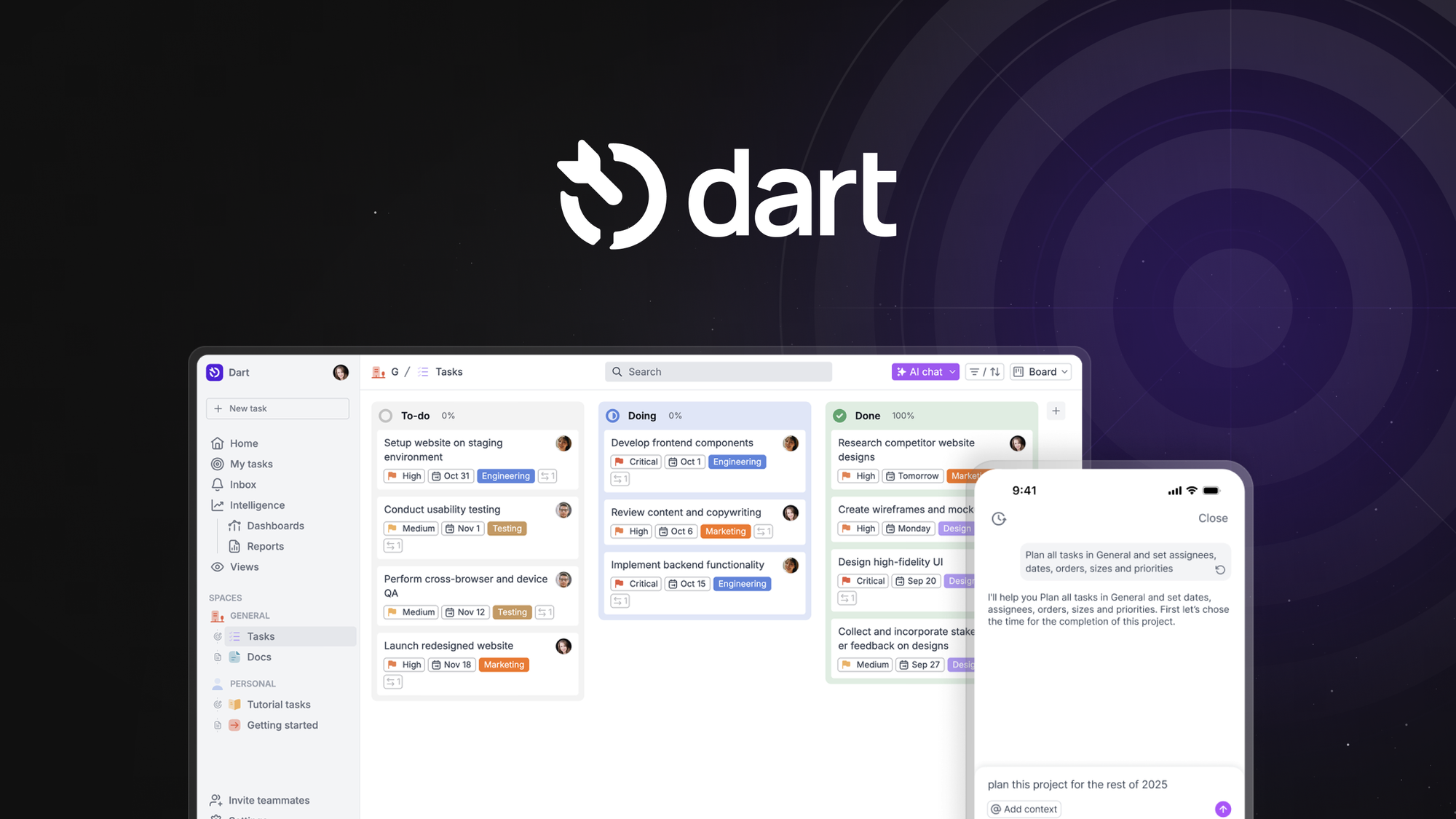
You get a project management workspace that feels built around how people actually work. Describe a project in plain language and Dart’s AI helps break it into tasks, build timelines, and keep status updates flowing so you spend less time on busywork and more time making decisions. It’s useful day-to-day for recurring client work, weekly standups, and automated status reports, and it also shines for bigger launches where you need templates, dependencies, and clear timelines. If you like tools that get smarter with use and save you repetitive setup, Dart is an easy one to try — especially if you value AI-driven automation and flexible views like kanban, timeline, and docs.
What People Say
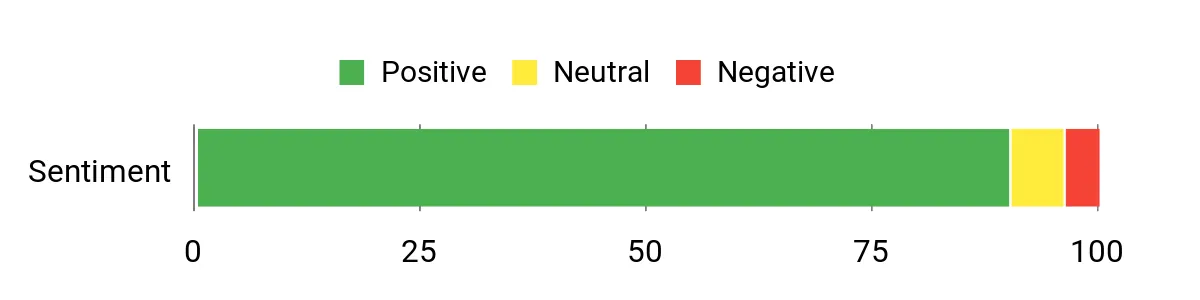
Customers repeatedly point out how Dart reduces manual busywork: people mention the AI assistant that creates tasks from descriptions, automatic status reports, and seamless integrations that funnel meeting summaries and emails into actionable tasks. Most feedback highlights practical day-to-day gains rather than vague promises.
Overall Sentiment: Positive
🗣️ eikonikos
The AI agent actually lightens the load: it helped this reviewer focus on high-impact work, and they planned to upgrade tiers to access webhooks and libraries for deeper automation.
🗣️ aslkdfj
Hands-on users praised true task dependencies and an AI button that can create projects, templates, and execute multi-step tasks. Reviewers noted intuitive setup, flexible views, automatic status reports, and integrations like Zap workflows and call summary imports.
Pros | Cons |
|---|---|
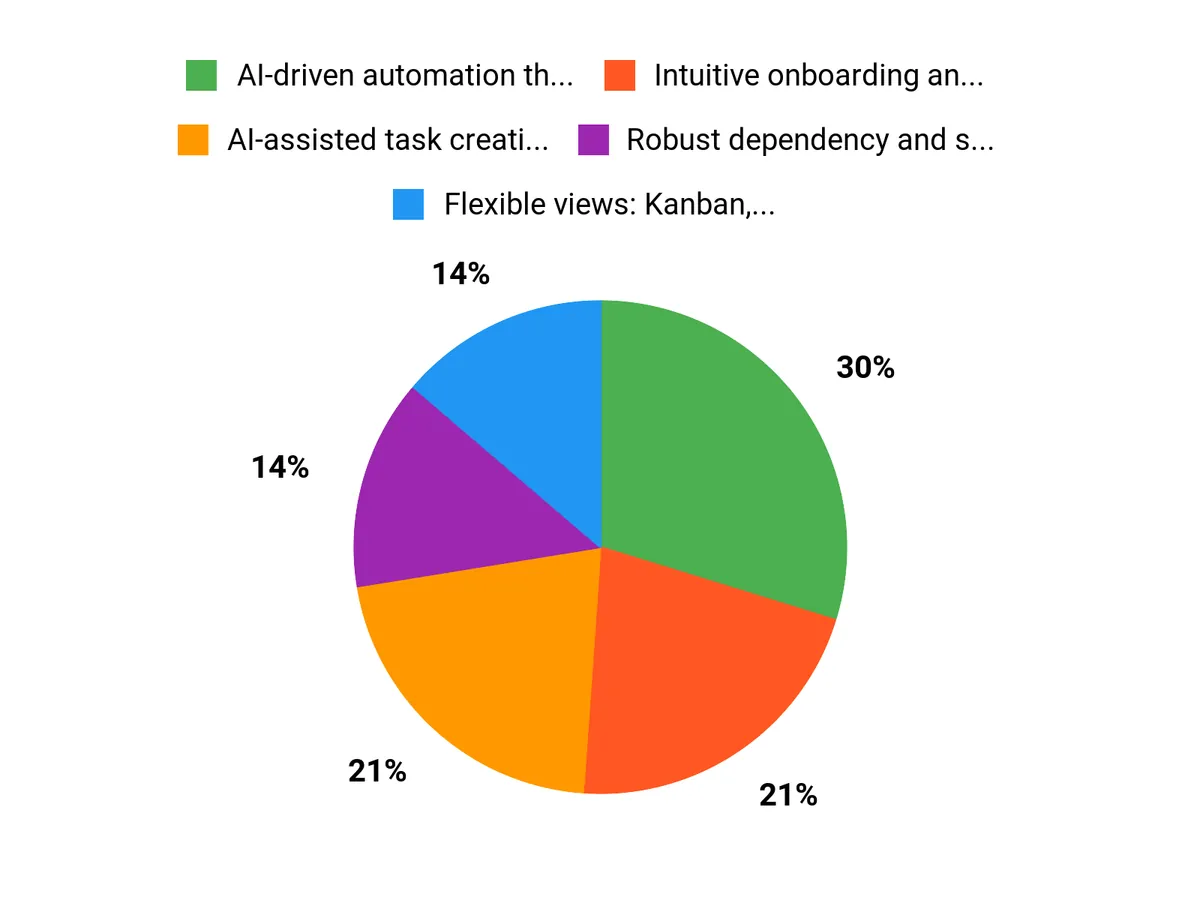
✅ AI-driven automation that actually executes tasks | ❌ Minor UX polish needed in a few flows (delete redirects, tag ordering) |
✅ Intuitive onboarding and setup | ❌ Some performance slowdowns reported with very large projects |
✅ Robust dependency and subtask support | |
✅ Good set of integrations (Zapier, webhooks, chat imports) |
How It Helps In Context
Situation | How It Helps |
|---|---|
Freelancer Managing Multiple Clients | You can funnel meeting notes and emails into client spaces, generate tasks from summaries, and run automated weekly standups to keep clients updated without manual reporting. |
Small Agency Coordinating Teams | Dart’s subtasks, dependencies, and filtered dashboards let you spot bottlenecks and assign follow-ups so projects move smoothly across people and timelines. |
Launching a Product or Campaign | Use templates, timeline views, and AI-driven task breakdowns to build launch plans quickly and keep cross-functional work synchronized. |
Ease Of Use
Feature | Ease Level |
|---|---|
Initial Setup | Easy |
Creating Tasks From Description | Easy |
Switching Views (Kanban/Timeline/Docs) | Easy |
Advanced Automations (Webhooks/API) | Moderate |
Usability
Aspect | Ease Level | Notes |
|---|---|---|
Project Setup | Easy | Many users report they can start without reading documentation. |
AI Automation | Easy | AI button performs complex actions like creating templates and tasks from summaries. |
Integrations | Good | Zap and call-summary integrations are commonly used and reliable for workflows. |
Performance on Large Projects | Moderate | A few reviewers note room for improvement with very large datasets. |
Integrations
Software | Integration Quality |
|---|---|
Zapier | Excellent |
Fireflies (call summaries) | Good |
ChatGPT / Chat Imports | Good |
Webhooks / API (Tier 4) | Advanced |
Collaboration
Shared project spaces, automated status reports, and filtered dashboards help teams stay aligned and spot who’s behind or ahead without manual chasing.
Workflow Management
Built-in dependencies, subtasks, templates, and AI-driven task execution let you design and run multi-step workflows with less manual oversight.
Key Benefits
- AI-assisted task creation and breakdown
- Flexible views: Kanban, Timeline, Docs
- True task and subtask dependencies
- Automations and integrations for recurring work
- Intuitive setup so you can hit the ground running
Rating: 4.68 (total: 34+)
FAQ
How Will Dart Transform Project Management With AI In 2026?
Dart embeds an AI agent into everyday workflows so you no longer treat AI as an add‑on — it helps you generate and break down project plans, turn meeting summaries into tasks, run automated standups and status reports, and even execute repeatable work via webhooks and APIs. You’ll spend far less time on manual tracking and more time on decisions because Dart automates routine task creation, dependency handling, and progress updates while keeping everything in the same workspace.
Practical tip: start by asking the AI to scaffold one or two recurring project types, then refine the templates and approvals so the system learns your language and constraints without removing human oversight.
Is Dart Secure And Reliable Enough For Sensitive Or Regulated Projects?
You should treat Dart like any cloud platform: verify its security controls, encryption, access management, audit logs and data export policies before you move regulated data in. In practice you can mitigate risk by redacting PII in inputs, scoping the AI’s permissions, limiting sensitive automations to trusted team members, and running initial deployments in a sandboxed space to observe behavior and latency. Practical tip: ask the vendor about model usage policies and retention, enable role‑based access and audit trails for compliance, and keep a documented approval step for any AI‑generated actions that change production systems.
What Should You Consider Before Adopting Dart And How Do You Get Started?
Before you adopt Dart, think about integration with your current tools, whether you need webhooks and API access for automation, how the platform handles very large projects, and what training your team will need to trust AI outputs. You should run a short pilot with one team or project to test migrations, templates, and performance, define governance rules for when AI can act autonomously, and measure time saved and error rates so you can iterate on templates and permissions.
Practical tip: map two to three core workflows you want to automate, import sample data, let Dart generate a draft plan, then review and refine that plan with stakeholders before scaling across teams.
Why Customers Choose Dart
You choose Dart because it automates routine work, gives predictive insights that help you prioritize tasks, and keeps your team aligned in real time so you can make faster, smarter decisions. It also plugs into the tools you already use, is easy to adopt, and delivers clear time and cost savings while keeping your data secure.
Wrapping Up
Dart brings AI-native project management to practical workflows: it helps you convert conversations into projects, auto-generate and break down tasks, and run automations that handle repetitive work. Reviewers praise its intuitiveness, built-in task dependencies, flexible views (kanban, timeline, docs), and the AI agent that can both plan and execute. There are some UX rough edges and room for performance improvements on very large projects, but the overall reception is strongly positive. If you want to reclaim time from administrative busywork and make your processes more consistent, Dart is worth evaluating as a way to let AI do the heavy lifting while you focus on strategy and high-impact work.
This Roundup is reader-supported. When you click through links we may earn a referral commission on qualifying purchases.